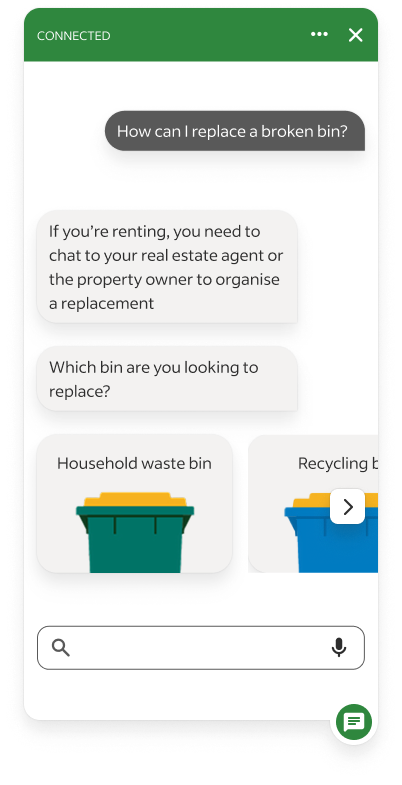
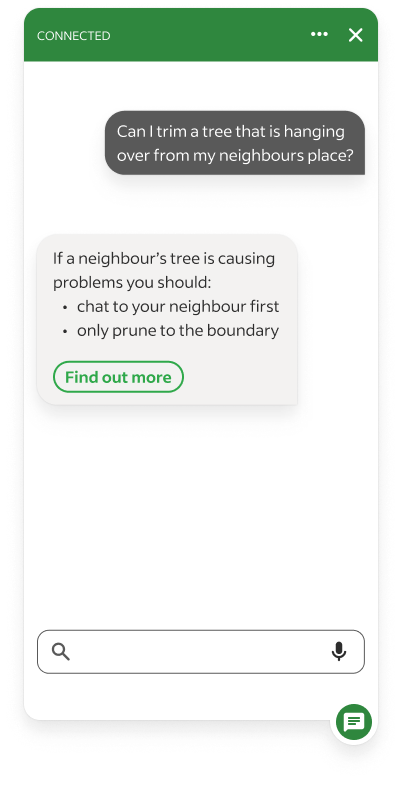
Phase 1: Discovery
Working with Service Designers, I interviewed 10 residents across different demographics and living conditions. From over 500 data points, 6 popular themes emerged — with waste, planning, and pets rising to the top.
I facilitated ideation sessions in collaboration with Service Designers around the 6 themes, bringing together subject matter experts from across the business to workshop solutions. 11 concepts emerged — including a 'Waste goes where?' lookup, convenient recycling drop-off points, and proactive issue reporting.
In a follow-up workshop with customers, I mapped each concept against desirability and feasibility. 'Waste goes where?' scored highest for feasibility and landed in the top 3 for desirability — giving us the confidence to move forward with a self-serve chatbot solution.
If only I'd had this when I was moving house and clearing out my old place. There were so many odd things I wasn't sure on how to dispose of.
It's a good idea instead of having to speak to someone directly, especially when it's busy and you can't get through to someone on the phone.
I only found out recently that you can't recycle Tetrapaks. If only I'd known this earlier. I could have used this chatbot to quickly find out.
Phase 2: content modelling
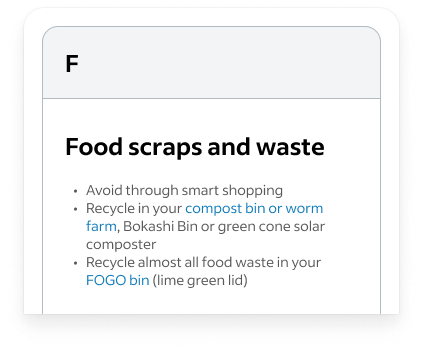
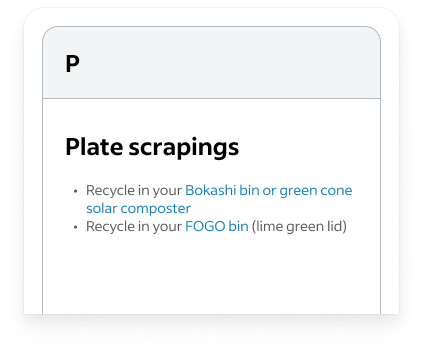
A deep dive into the existing A to Z Recycling and Waste Guide revelead a static and rigid structure. Residents had to know exact terms to look for when searching, content was often duplicated and the cotnent team was left with a time-indusive maintenance overhead.
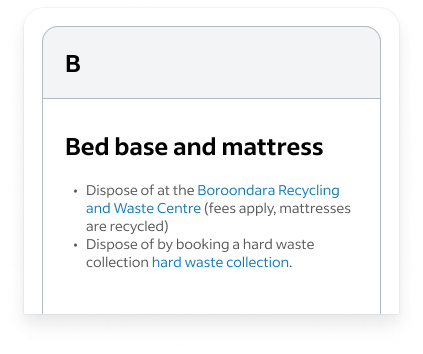
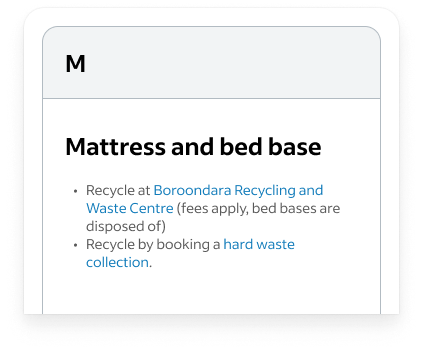
I discovered that items could have multiple ways to dispose of them and disposal methods could belong to multiple items. This basic logic formed the new structured content models that would ensure there was a single source of truth for all information; no duplication.
Phase 3: expanding topics
To ensure the experience was cohesive, clear and user-centric, I worked with content and accessiblity partners to develop defined the tone, voice and style of the chatbot.
To identify the right questions for the chatbot, I needed to understand what users were already asking. I pulled insights from topic and question data from surrounding councils, top searches in Siteimprove and Google Search Console, customer feedback reports, and data from the customer service team. Mapping these findings in helped define the top 50 questions for phase 2 of the project.
Building out chat branches
I wrote the questions and answers, working closely with subject matter experts to validate them before building out the conversation flows in the platform itself.
Phase 4: transition to BAU
Continuous improvement plan
To keep the chatbot content relevant, I implemented a continuous improvement process — covering a workflow for changes from business areas, a weekly data-informed review, and a style manual to capture the chatbot's tone, voice, and audience.
To set the chatbot up for success, I trained the digital content team on running the improvement process and ran an awareness campaign to inform the wider business of the launch.
The impact
Within 6 months of the chatbot being live...
Increased FAQs from
50 to more than 190
Achieved a deflection rate of 38.21%
Accuracy rate improved from
38% to 82%
Increased questions answered a month from 411 to 2,927
.png)