Phase 2: Information architecture
The existing occupation taxonomy ran 6 levels deep — too many to surface directly to users without causing confusion. While collapsing to 2 levels created the opposite problem, leaving some pages with over 100 roles to scroll through. I analysed each layer to find the right balance, landing on a 3 level structure — industry, topic, and occupation, giving users enough context to navigate without overwhelming them.
Validating with subject matter experts
I consulted segmentation specialists across healthcare and technology to pressure-test topic-level labels. Research showed that entry-level job seekers prefer broader search terms, which supported using level 2 labels (e.g. "Nursing", "Software Development & Architecture") as topic anchors.
To validate the proposed structure before design and development work began, I ran a tree test with job seekers who were actively looking to switch into healthcare or technology. The findings informed the final IA — surfacing where the proposed labels didn't match how users naturally thought about careers, and allowing me to tweak the structure so it better reflected their mental model.
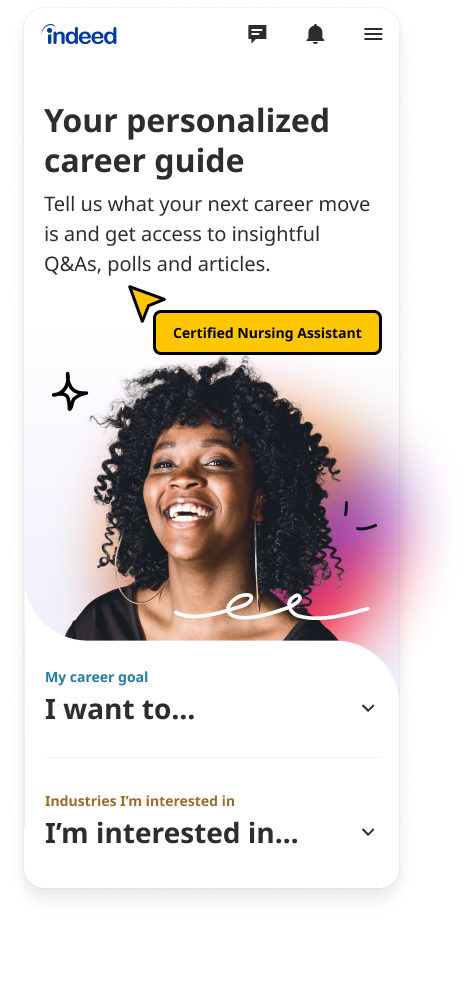
I defined the URL structure across all page types — from the community homepage to individual question pages — and made the case for routing the product under /education/ rather than the existing /certifications/ path, to better reflect our users mental model.
Phase 3: content strategy
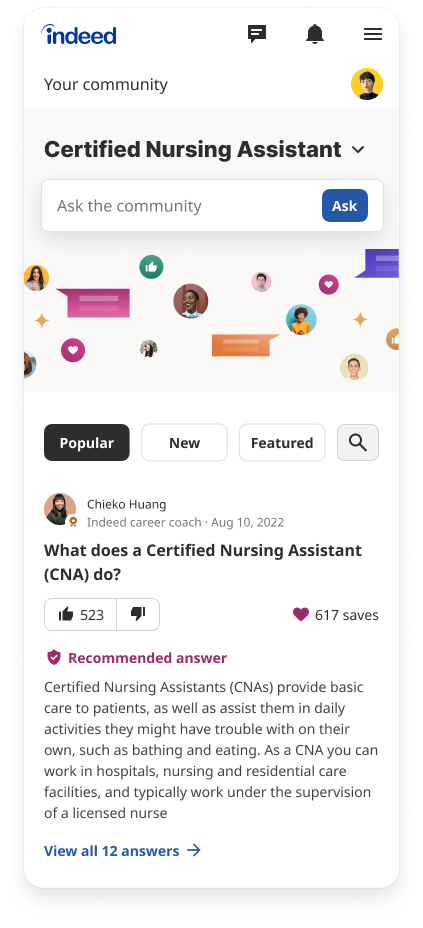
I designed a tagging system that mapped each question to industry, topic, and occupation — making content discoverable both within the community and across other Indeed surfaces like Career Guide, Career Explorer, and the Upskill Dashboard. I also documented tag inheritance logic (e.g. tagging an occupation auto-populates its parent topic and industry tags).
I identified 4 sources to seed questions from: 1:1 career coaching sessions, unmoderated user testing, top questions by monthly search volume (in partnership with the SEO team), and Career Explorer question sets. Based on search volume patterns and common question themes across occupations, I recommended launching with 20 seed questions per occupation, and defined the questions we should launch with.
I evaluated 5 potential answer sources — including scraping Fishbowl and Quora — and made a clear recommendation to rule out third-party scraping due to IP risk, content quality concerns, and inability to verify user credentials. Instead, I recommended sourcing answers from validated sources such as Indeed's Career Guide articles, Career Explorer, and targeted outreach to Indeed users who identified as the relevant occupation in their profile.
Phase 4: Content lifecycle and moderation
I mapped entry points across the Indeed ecosystem — Career Guide articles, the Upskill Dashboard, Education SERPs, and the 1:1 career coaching funnel — and defined appropriate linking strategies for each, weighing the risk of sending users to a page that may not match their intent.
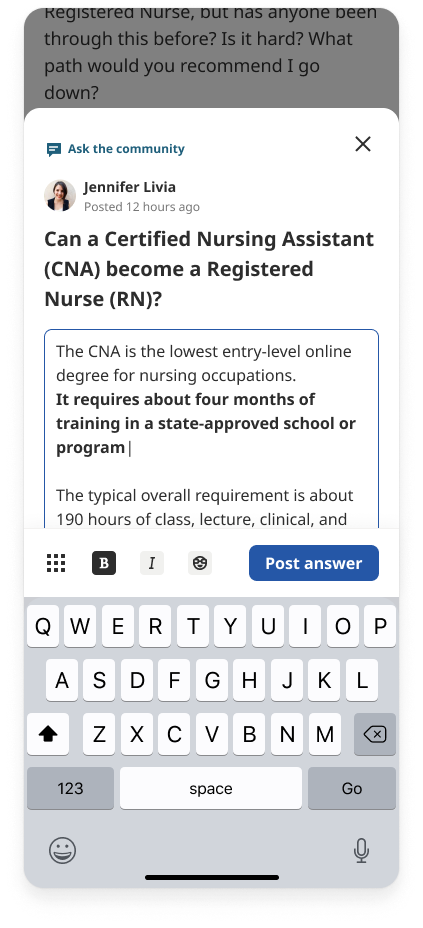
I audited existing Indeed and jobseeker moderation policies and identified which could be repurposed for the Community Q&A. I documented an automated moderation rule set (covering profanity, spelling errors, phone numbers, email addresses, and more), defined the manual review workflow, and — following budget cuts — scoped a "report a post" fallback to replace the full manual moderation flow.
I wrote the community guidelines page, benchmarking tone and structure against Fishbowl and Indeed's existing Company Pages policies. The goal was to build trust through plain language, clear structure, and transparency around content standards and enforcement.